Why Sparta Praha want to be seen everywhere
Most sports marketing focuses on existing fans. Sparta are taking a different approach. Inspired by Byron Sharp’s work on brand growth, they’re trying to reach people who don’t currently care about the club - or even football itself.

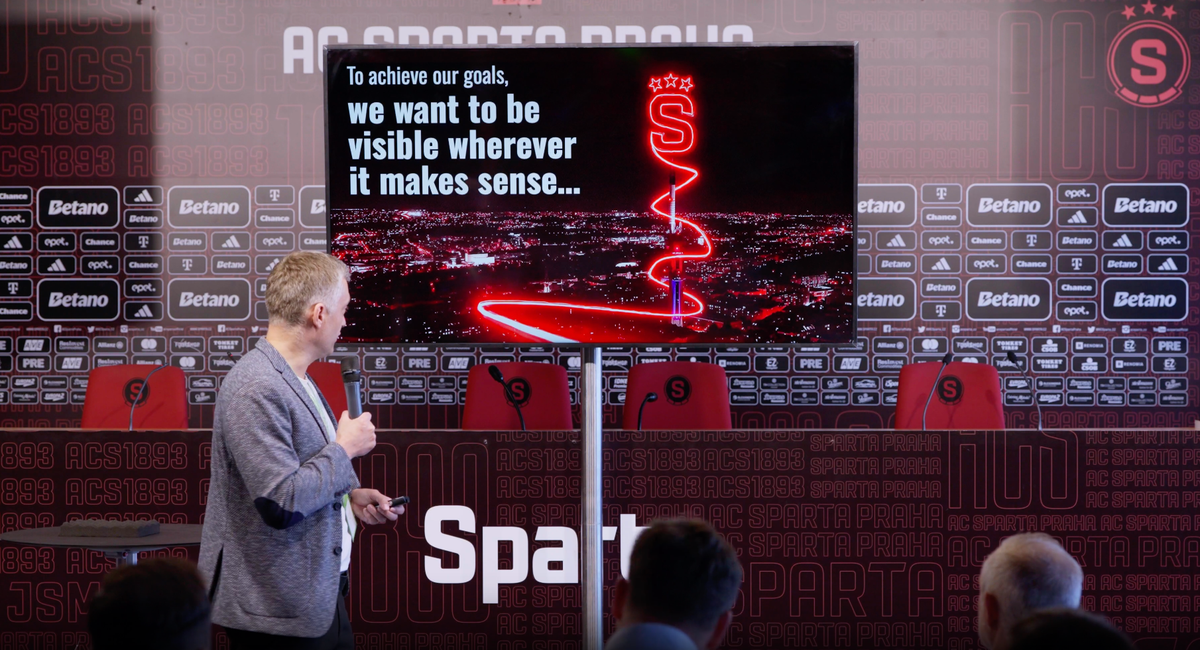
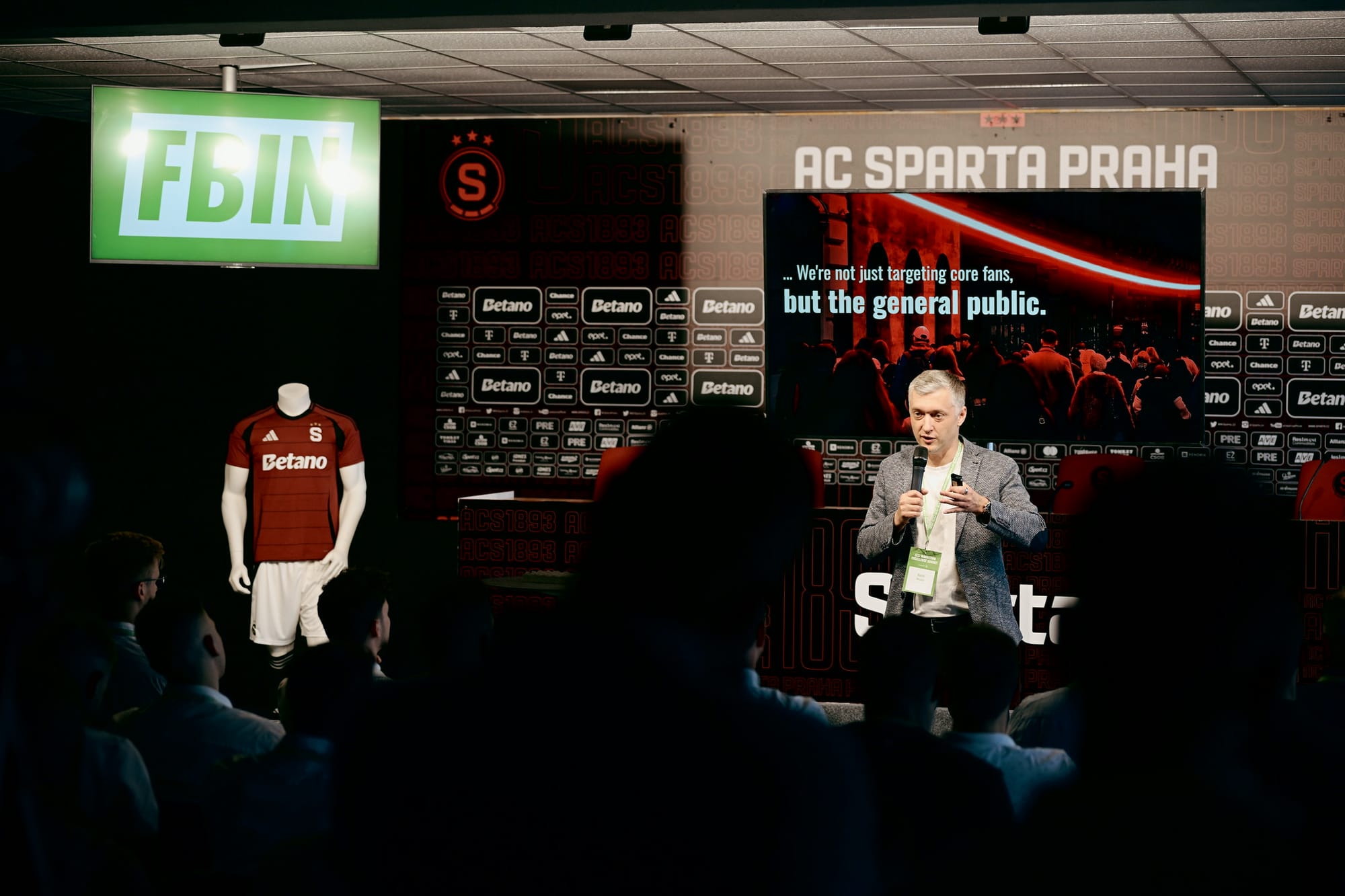
In May I had the chance to attend the FBIN Marketing Excellence Summit in Prague. It was the third in the annual series of excellence summits we hold (I've been working with FBIN since May 2025 on the events and education programmes), and we had a great range of speakers.
While I took plenty away from the day, including the panel discussion I chaired, what was most refreshing was to hear brand theory mentioned in the opening talk.
AC Sparta Praha's Marketing Director, Kamil Veselý, opened the day by explaining the club's approach to growth. And I want to explore this and go into detail about what you can learn from their refreshing way of doing things.
Popping the bubble
Firstly, the context for the club is that they're about to move into a new stadium with double the capacity. Their challenge is filling it.
Kamil's approach is to not rely on existing supporters. They estimate they have around one million of these already. To become twice as big as they are now means trying to market to people beyond that core supporter group. This approach contrasts with much of sports marketing, which tends to focus heavily on existing supporters.
The reason for this is that there are only a certain number of existing Sparta fans. Yet there are a lot more people outside of this group.
Kamil calls this "popping the bubble".
Most sports marketing is designed to sell tickets or memberships, drive engagement, and keep existing fans happy. Sparta have made the decision to focus on brand marketing instead.
This involves activity designed to increase awareness, familiarity, and cultural relevance among people who might not have any immediate interest in attending a match.
What does the theory say?
The approach from Sparta is inspired by Byron Sharp's 2010 book How Brands Grow. In it, Sharp's core argument is that brands grow when more people notice them, remember them, and find them easy to buy from.
The two central concepts are mental availability and physical availability. In a nutshell, how often do you come to mind when someone is making a decision? And how easy is it for people to find, access, and buy from you?
In practice, this means growing your club by ensuring more people know who you are and making it easy for them to buy when the moment arrives.
This is what's underpinning Sparta's marketing.
Grow the category, not just the club
One issue with only trying to reach your existing fans is that, sooner or later, you're going to run out of them. Plus, most people who like football have probably already chosen a club.
I've supported Newcastle United my whole life. To this date I haven't come across a marketing campaign that could turn my head to support someone else.
Sparta's approach? They're trying to grow interest in football itself.
By increasing the number of people who like football, they increase the potential audience size of their own club. They've recognised that you can't compete with your rivals for fans, but you can increase the number of people who like your category (football, in this case).
Persuading people to care about the sport in the first place is probably easier than asking them to switch who they support.
What are they doing?
Sparta’s marketing deliberately extends beyond traditional football audiences.
- They've partnered with Footshop, a local streetwear company targeting young people. The intention is to address data showing a 40% gap in interest in sport between generations.
- They released a song called Letná by Rohony and Manene to coincide with winning the title in 2024. It's had more than 30m streams across Spotify, YouTube and other streaming platforms. It was designed to be popular in the mainstream, rather than as a specific football song.
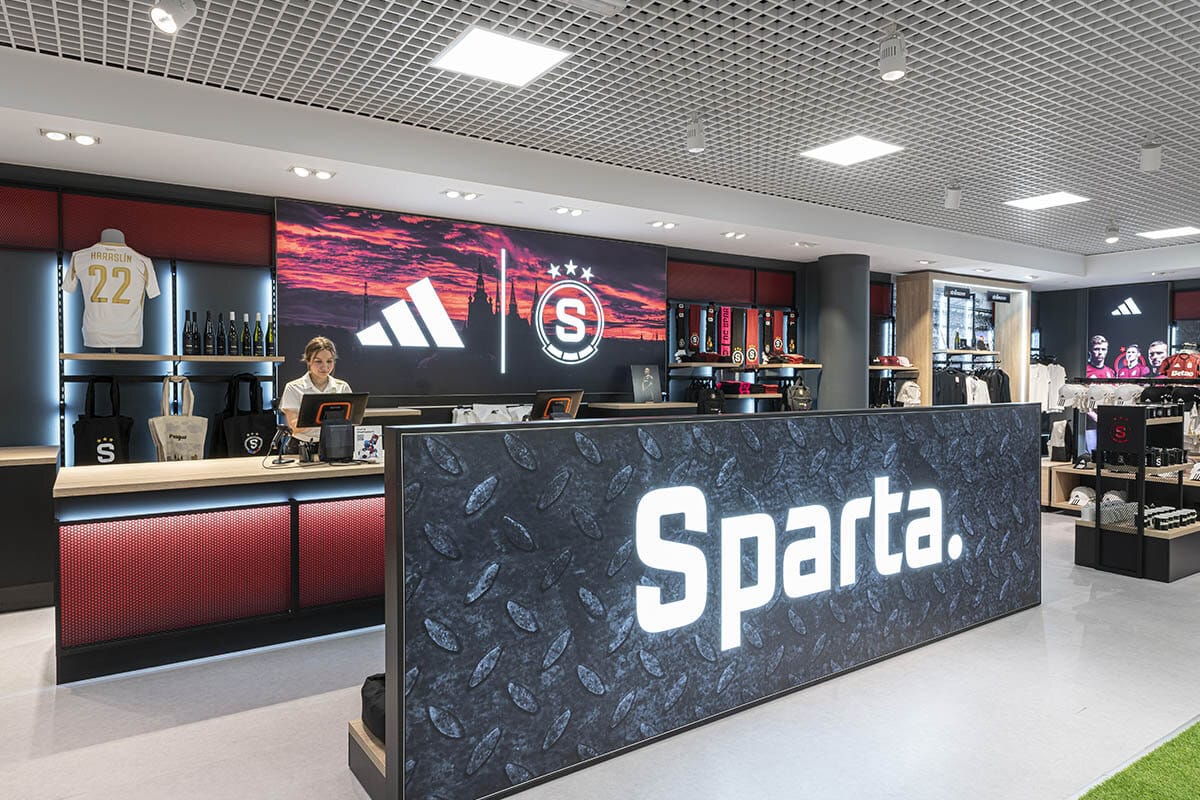
- They have launched an airport shop, with the justification that more than 10m tourists travel through it each year. This means they've got a major physical presence in one of the first places that tourists see - in fact, it's the biggest shop in the airport. The shop isn't described as a revenue-generating retail operation, instead it's a highly visible brand-building tool. And yes, I did buy a shirt on my way home. This is classic physical availability.
- They produced a film to combat the perception that fans are all "like the ultras". It's inspired by Love Actually and has multiple main characters to show that there are many types of fans, including a Slavia Prague fan dating the daughter of one of Sparta's ultras, a philosophy teacher who loves football, and a former player who played for both Slavia and Sparta. This helps make the sport culturally attractive and accessible. They distributed it in cinemas after data showed that 70% of cinema-goers were women, hoping to attract a traditionally underrepresented audience group to the club. They achieved nearly 200k cinema viewers, meaning it was the fifth most-watched Czech film in 2025. It reached approximately one million viewers on television and is now available on Netflix too. A further byproduct of the film was the tabloid media picking it up, increasing visibility.
They want Sparta to pop up in more places and more moments.
On the whole, these projects aren’t designed to drive an immediate transaction. They’re designed to increase familiarity. Sparta appear comfortable investing in activities that make more people aware of the club today in the belief that some of those people will become customers in the future.
Think of each one as a Trojan horse. Most of them are interesting and entertaining in their own right even without the club angle.
Taken together, these initiatives are all doing the same thing. The song helps people remember Sparta. The airport store helps people encounter Sparta. The film introduces Sparta to people who may never have engaged with football. Different tactics, but all increasing the club’s mental and physical availability.
Interestingly, one of Kamil's reflections is that the film actually has too much Sparta branding. In hindsight he feels it should actually have been less about Sparta and more universal.
Attention is the competition
The hope is that if someone in Prague decides they want to attend a football match, Sparta is the first one that comes to mind
If a tourist arrives and wants to take in some sport, Sparta should be the easy and obvious choice.
If a child is getting into the sport and wants a team, Sparta should be front and centre.
The overriding message is that football isn't just for "football people".
Sparta have identified that a club's main competition isn't other clubs, it's attention. Especially when it comes to those younger audiences.
Traditionally, clubs view their rivals as their biggest competitors. Sparta’s approach suggests something different. For many younger audiences, football isn’t competing with another football club. It’s competing with Netflix, TikTok, gaming, music, fashion and every other way people can spend their free time.
What lessons can we learn from this?
Sparta have had considerable spend behind their marketing. Obviously not all clubs can do this.
Instead, the lesson is to find ways to become visible outside your existing audience. I've touched on this before. If you're a community club, questions you can ask yourself include:
- Which local audiences don't currently engage with us?
- Where do they spend their time?
- What interests them besides football?
- How can we show up there?
This could lead to partnerships with schools, collaborations with local artists, community storytelling projects, appearances at festivals, local music partnerships, and content centred on people rather than matches.
These have a different scale, but the principle is exactly the same.
The most important lesson from Sparta isn’t that clubs should make films, write songs or open airport stores. It’s that growth requires reaching people who aren’t already paying attention. Sparta’s projects look very different on the surface, but they’re all solving the same problem: how do we become more visible to people who aren’t currently football fans?